Plymouth MN Condos and Townhomes: What to Review
May 14, 2026
May 14, 2026
If you are weighing condo or townhome living in Plymouth, you are probably trying to balance cost, convenience, and lifestyle. You may want less exterior maintenance, a simpler daily routine, or a way to stay in Plymouth without taking on the full cost and upkeep of a detached house. The good news is that attached-home options in Plymouth cover a wide range of price points and living styles. Let’s take a closer look at how they work and what to review before you buy or sell.
Plymouth is not a place where condos and townhomes sit on the sidelines. The city’s planning framework treats housing as a major long-term issue, and its City Center amendment increased allowed density to 6 to 20 units per acre for townhouses and 20 to 40 units per acre for multiple-family development.
That matters because it shows attached housing is part of Plymouth’s growth pattern. City planning materials also reference multiple dwellings, townhouses, and similar housing types, which reinforces that condos and townhomes are an established part of the local housing mix.
In Minnesota, many condo and townhome communities are set up as common interest communities. In simple terms, you own your individual unit, while shared parts of the property are owned in common with other owners.
That shared structure is what creates the low-maintenance appeal for many buyers. Minnesota law says the association is generally responsible for maintaining, repairing, and replacing common elements, while the unit owner is responsible for the unit itself unless the declaration says otherwise.
This is why two homes that both look like “townhomes” can function differently. The details depend on the community’s declaration, the boundaries of the unit, and which items the homeowners association handles.
HOA dues are a major part of condo and townhome living, so it is important to understand what you are paying for. These dues help fund shared obligations, not just convenience.
Minnesota law requires associations to carry property and liability insurance, prepare annual budgets with operating expenses and reserves, and keep replacement reserves separate from operating funds. Associations can also use special assessments for emergencies, underfunded reserves, or unbudgeted capital and operating expenses.
For you as a buyer, that means monthly dues may support things like exterior upkeep, common-area maintenance, shared insurance obligations, and amenity operations. In some communities, those dues may also support features that detached homes do not typically include, such as underground parking, pools, clubhouses, walking paths, or exercise rooms.
Convenience usually comes with shared governance. Minnesota law allows associations to regulate the use of common elements, unit conduct, animals, and aspects of exterior appearance.
That can include rules for balconies, patios, window treatments, and signs. For some buyers, that structure feels helpful and orderly. For others, it can feel restrictive, so it is worth reading the rules carefully before you commit.
Plymouth condos can range from simple and efficient to more amenity-focused. Current examples in the market include layouts around 976 square feet with 2 bedrooms and 2 baths, plus features like in-unit laundry, underground parking, and monthly HOA dues in the several-hundred-dollar range.
Some condo communities also offer shared amenities such as pools, tennis courts, playgrounds, exercise rooms, clubhouses, community gardens, and walking paths. That means a condo may offer a more compact footprint while still giving you access to features that support a lower-maintenance lifestyle.
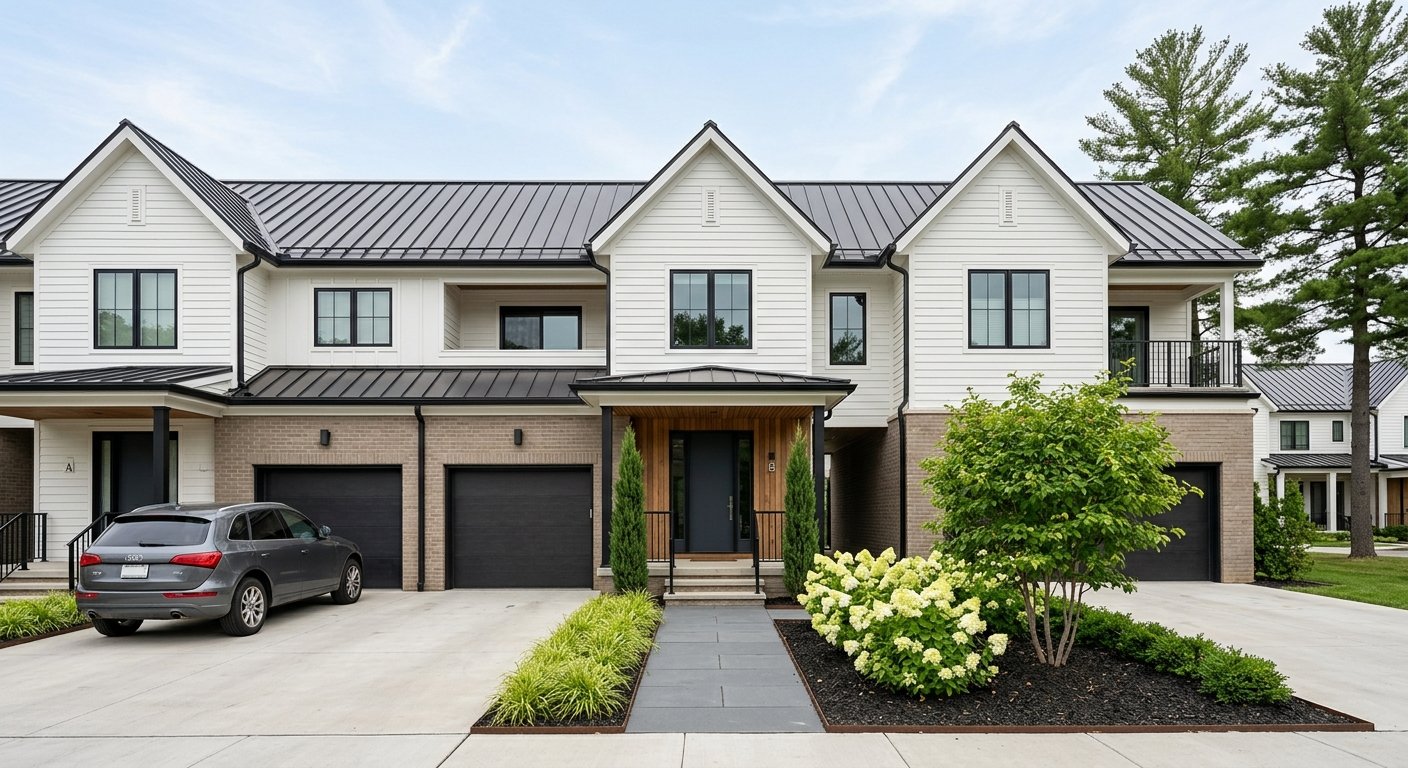
Townhomes in Plymouth often feel more house-like. Current examples include 2-bedroom, 2- to 3-bath layouts around 1,900 square feet, with attached two-car garages, decks, vaulted ceilings, and finished lower levels or flex spaces.
That larger layout can be a strong fit if you want attached living without giving up too much interior space. A townhome may also appeal if you want easier upkeep but still prefer multiple levels, private garage parking, and more room for work, guests, or hobbies.
The label alone does not tell you enough. In Plymouth, the difference often comes down to floor plan, parking, amenities, and exactly what the HOA maintains.
| Home Type | Typical Feel | Common Features | Key Consideration |
|---|---|---|---|
| Condo | More compact, shared-building lifestyle | In-unit laundry, underground parking, shared amenities | Review what is included in dues and what interior items are excluded from association coverage |
| Townhome | More house-like, multi-level living | Attached garage, deck, larger floor plan, finished lower level | Confirm which exterior elements and structural items are owner responsibility versus HOA responsibility |
Attached homes can also create an entry point into Plymouth at a lower price than many detached homes. A current Plymouth market snapshot shows a median sale price of $565,000 for single-family homes, compared with $335,000 for townhouses and $300,000 for condo or co-op homes.
That is a meaningful gap. On that snapshot, townhouses were about $230,000 below the single-family median, while condos and co-ops were about $265,000 below it.
At the same time, price overlap can happen. Newer or larger attached homes with generous layouts, attached garages, and finished lower levels may compete with the lower end of detached-home pricing.
If you want Plymouth access with a lower price tag, condos and townhomes deserve a close look. You may be able to prioritize location, convenience, or lower maintenance while spending less than you would on a detached home.
Still, your monthly cost is not just the mortgage. You need to factor in HOA dues, insurance for the parts of the property the association does not cover, and the possibility of future special assessments.
In the Twin Cities metro, broader market data also shows differences in pricing power and pace. Single-family homes sold at 100.7% of list price on average, townhomes at 98.8%, and condos at 95.2%, while condos took the longest to sell.
That does not mean condos are weak. It means pricing, presentation, and association quality can have an even bigger impact when you buy or sell in this segment.
Attached-home living often fits buyers who want less exterior-maintenance responsibility. That can include downsizers, busy professionals, frequent travelers, and homeowners who want a simpler lock-and-leave setup.
It can also work well if you want to stay in Plymouth but are ready for a different type of ownership. For many sellers making a next-step move, a condo or townhome can reduce upkeep without requiring a move out of the west metro.
Before you buy a Plymouth condo or townhome, make sure you review more than the photos and monthly dues. The association documents often tell you as much as the floor plan does.
Pay close attention to:
Minnesota law requires annual budgets with operating expenses and reserves, and replacement reserves must be kept separate from operating funds. That gives you a useful framework, but you still want to understand how well a specific association is managing its responsibilities.
Minnesota buyers have important disclosure rights in common interest communities. State law requires a resale disclosure certificate dated no more than 90 days before the purchase agreement or conveyance.
It is smart to read that package early. If required information is not delivered on time, the buyer may have a 10-day cancellation right.
For you, this is not just paperwork. It is one of the clearest windows into the association’s finances, rules, and overall condition.
If you are selling a Plymouth condo or townhome, clear documentation can make a real difference. Buyers often look closely at the association’s rules, reserve funding, insurance position, and overall organization before they feel comfortable moving forward.
That means preparation matters. Having association documents ready and presenting the property clearly can help reduce friction and build buyer confidence.
For sellers moving from a larger home into an attached property, this can also be a chance to simplify. With the right guidance, you can evaluate timing, prep work, and pricing strategy in a way that supports your next move.
If you are considering a condo or townhome in Plymouth, or preparing to sell one, local market knowledge matters. The right guidance can help you compare communities, understand the fine print, and make a move that fits your goals with confidence. To talk through your options in Plymouth and the west metro, connect with Aaron Lowe.
Our expansive network and white-glove service ensure a bespoke experience for both buyers and sellers. Let our top producing team find your dream home today.
CONTACT US