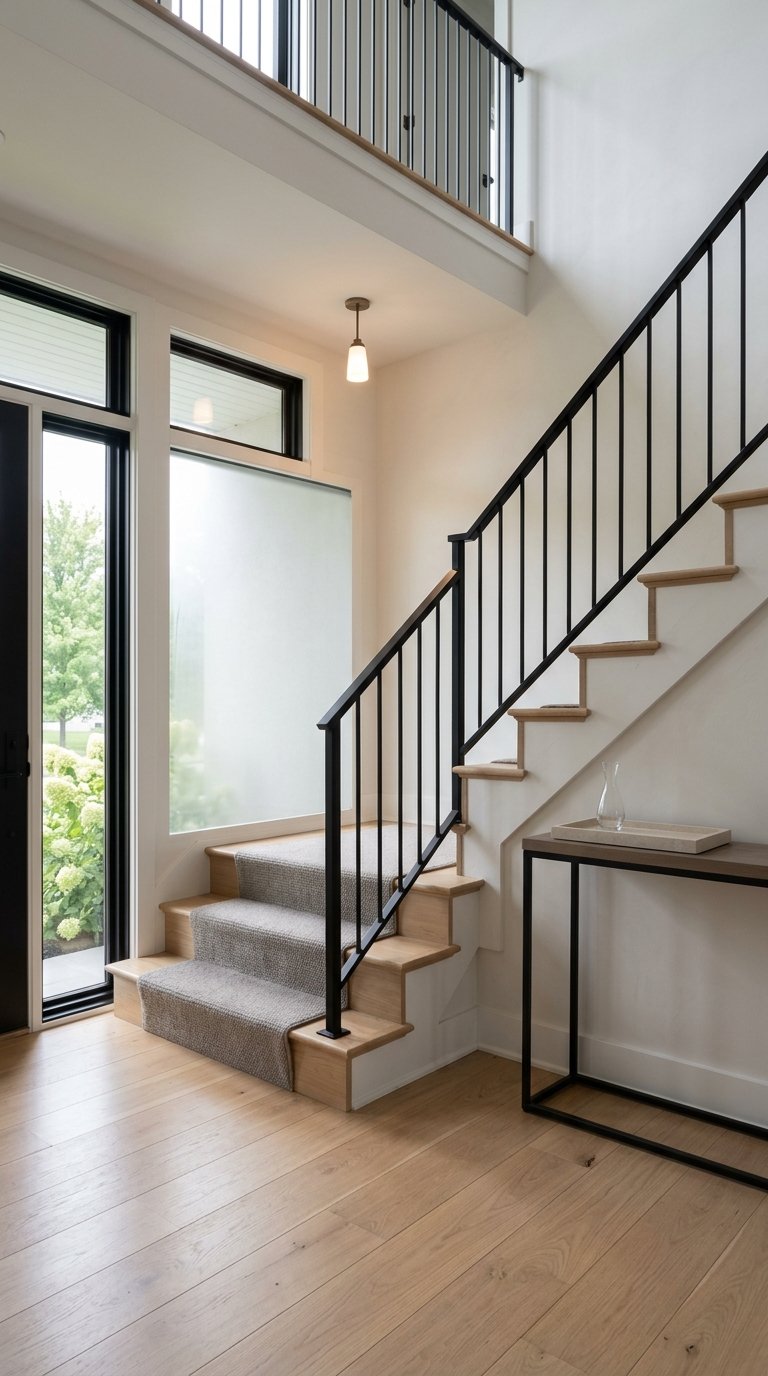
Plymouth Market Insights For Move-Up Home Buyers
June 4, 2026
June 4, 2026
If your current home no longer fits the way you live, Plymouth can give you more options than many move-up buyers expect. You may be looking for another bedroom, better layout, newer finishes, or a different part of the city that better matches your daily routine. The good news is that Plymouth still offers meaningful upgrade paths, but timing, pricing, and location matter. Let’s dive in.
Plymouth is currently a market in the high-$400,000s to about $500,000, depending on whether you look at recent sales or active listings. Recent public data showed a median sale price of $478,523, while median listing prices ranged from about $499,900 to $525,000. The safest way to read that data is as a range, not one exact number.
That range matters if you are selling one home and buying another in the same city. Plymouth sits above the broader Hennepin County median, and homes are still moving relatively quickly. Recent market snapshots showed median days on market in the mid-20s, with sale-to-list ratios around 100%.
For move-up buyers, this is a market that still rewards preparation. Inventory has improved compared to tighter periods, but it remains below balanced-market levels across the metro. That means well-positioned homes can still move fast, and your next purchase may still require a sharp strategy.
If you already own in Plymouth or the west metro, you may be in one of the stronger positions in today’s market. Minnesota REALTORS reported that move-up buyers and downsizers with equity currently have an advantage relative to many first-time buyers. That does not remove the need for careful planning, but it does create flexibility.
Your equity can help in a few ways. It may increase your down payment, improve your offer strength, or help you absorb a higher monthly payment if you are buying at a higher price point. In a market where mortgage rates remain meaningful, that flexibility can make a real difference.
As of late May 2026, Freddie Mac reported the average 30-year fixed mortgage rate at 6.53%. Even buyers with strong equity should pay close attention to monthly payment changes, not just the purchase price. In many move-up scenarios, the payment jump matters more than the headline price jump.
One of the most useful ways to think about a move-up purchase in Plymouth is by bedroom count and common price bands. Current inventory suggests a practical ladder for buyers moving from a starter or mid-level home into something larger.
Current three-bedroom inventory is concentrated from the mid-$300,000s to the low-$500,000s. Some larger or more updated homes reach into the mid-$600,000s and above, but the broadest range is lower than many buyers assume.
If you are moving from a smaller or older home and want a modest step up, this can be an efficient range to watch. It may offer more flexibility on layout, updates, or location without pushing into the highest competition bands.
Four-bedroom inventory is the deepest segment in Plymouth right now. Public listing data showed about 98 active four-bedroom properties, which is more than the two-bedroom, three-bedroom, or five-bedroom buckets.
That matters because the four-bedroom category is often the clearest move-up lane. Current listings generally cluster from the mid-$400,000s to the high-$700,000s, with new construction and larger homes pushing above $800,000.
For many households, this is the most practical target. You can often gain usable square footage, additional bedrooms, office space, or a better main-level layout while staying inside the broad middle of the Plymouth market.
Five-bedroom inventory starts higher. Current listings generally begin in the high-$500,000s or low-$600,000s and stretch through the upper-$800,000s, $900,000s, and beyond.
This is also where pricing can widen quickly. Lake-oriented homes, new construction, premium lots, and estate-style properties can push into the multi-million-dollar range. If your move-up goals include a major lifestyle jump, this segment may offer it, but your pricing strategy needs to be especially disciplined.
Plymouth is still functioning as a seller’s market, just with a less frantic feel than some recent years. Recent market snapshots showed roughly 24 to 27 median days on market, with a 100% sale-to-list ratio. That suggests buyers have more opportunity than in a near-panic market, but not unlimited leverage.
Hennepin County data helps add context. In April 2026, 43% of homes sold above list price, while 19.1% had price drops. That combination tells you the market is selective. Well-priced homes can still attract strong activity, while overpriced homes may sit longer and need adjustment.
For move-up buyers, that creates a useful opening. If a home has been on the market longer, sits in a less competitive price tier, or is priced a bit aggressively, you may have more room to negotiate. On the other hand, if a home is fresh, well-prepared, and aligned with the most active price band, you should be ready to act quickly.
A contingent offer means the contract depends on one or more conditions. In practice, the seller may still continue showing the home while those conditions are unresolved.
For move-up buyers, that usually means a sale contingency is possible, but not always ideal. In a market where good homes can still attract clean offers, contingent terms tend to work better when the property has been available longer or is less likely to draw immediate competition.
That does not mean you should avoid trying. It means you should be realistic about where a contingent offer has the best chance. In Plymouth, the best opportunities often come from identifying homes that are slightly outside the most aggressive competition window.
One of the biggest mistakes move-up buyers make is underestimating the timeline. A Plymouth home may go under contract in about a month based on current market pace, but that is only one part of the process.
You still need time for preparation, photography, listing, negotiations, inspection periods, financing, and the closing sequence on your replacement home. When you stack a sale and purchase together, timing becomes a strategy issue, not just a calendar issue.
This is where clear planning matters most. Before you shop seriously, it helps to know your likely sale range, your comfort level on payment, and how flexible you can be on closing dates or possession. Those details can determine whether your move feels controlled or chaotic.
Moving up in Plymouth is not only about getting a larger house. It can also mean choosing a different part of the city with a different housing profile, commute pattern, or daily rhythm.
Recent ZIP-level snapshots showed meaningful pricing differences inside Plymouth. Median listing prices were around $425,000 in 55441, $499,900 in 55447, and $607,450 in 55446. That spread suggests that a move-up plan can involve changing location as much as changing square footage.
Plymouth is crossed and bordered by I-494, Highway 169, Highway 55, and I-394. For many buyers, that makes drive patterns and regional access an important part of the home search.
If you commute regularly or travel throughout the west metro, location inside Plymouth can shape your experience more than a few extra interior features. A well-chosen location can support both daily convenience and future resale appeal.
The City of Plymouth highlights 188 miles of city, state, and regional trails, along with 1,834 acres of park land and 68 developed parks. For buyers who want easier access to outdoor recreation, this is one of the city’s major lifestyle strengths.
When comparing neighborhoods, it helps to look beyond the home itself. Trail access, park proximity, and how you use outdoor space can all influence which move-up option feels like a meaningful improvement.
The City of Plymouth states that the community is served by four school districts: Wayzata, Robbinsdale, Osseo, and Hopkins. School boundary can be one of the most important filters for move-up buyers because it shapes both search options and future resale considerations.
The key is to verify district and attendance information for any property you are considering. In a city with multiple district boundaries, that detail can affect both your shortlist and your long-term satisfaction with the move.
Plymouth City Center sits about one mile west of I-494 on Highway 55 and serves as a civic, recreation, and commercial hub. Buyers who want more convenience and access to amenities may compare this area differently from neighborhoods farther out with larger lots or a more residential feel.
Neither choice is universally better. The right fit depends on how you want to live, how long you expect to stay, and what kind of resale story you want your next home to have.
In today’s Plymouth market, the best move-up decisions usually come from matching three things: your current equity, your real monthly payment comfort zone, and the specific part of Plymouth that supports your next stage. The city offers options across a wide range, but the strongest outcomes come from filtering the market with intention.
That is especially true if you are weighing resale versus new construction, comparing four-bedroom options across price bands, or trying to align a sale and purchase without unnecessary pressure. In a market that is still competitive but more nuanced, local knowledge becomes a real advantage.
If you are thinking about moving up in Plymouth, a clear plan can help you avoid overpaying, underpricing your current home, or choosing the wrong timing. When you understand the market range, inventory depth, and neighborhood tradeoffs, your next move becomes much easier to execute with confidence.
If you want a clear, local strategy for selling your current home and upgrading in Plymouth, connect with Aaron Lowe. His market knowledge, pricing discipline, and west-metro experience can help you move with confidence.
Our expansive network and white-glove service ensure a bespoke experience for both buyers and sellers. Let our top producing team find your dream home today.
CONTACT US