Why Plymouth Is A Strong Move-Up Market For West-Metro Buyers
April 2, 2026
April 2, 2026
If you have outgrown your current home but do not want to leave the west metro, Plymouth deserves a close look. It offers the kind of housing range, resale stability, and daily convenience that many move-up buyers want, especially when you are trying to balance more space with a smart long-term decision. If you are weighing your next step, this guide will show you why Plymouth stands out and how to think about timing, price, and opportunity. Let’s dive in.
Plymouth works well as a move-up market because it supports more than one stage of homeownership. According to the city’s housing plan, Plymouth aims to provide housing for all life-cycle stages, including households moving up to a second or third home, while maintaining a mix of housing types, prices, and styles through options such as detached homes, two-unit dwellings, townhomes, and apartments (City of Plymouth housing plan).
That matters if you are trying to stay in a familiar part of the west metro while upgrading your home. Instead of jumping to a completely different market, you can often move within a suburb that already has a visible path from lower-maintenance housing to larger single-family homes. In practical terms, Plymouth is not just a place to start. It is also a place where many buyers can take the next step.
The broader ownership profile supports that story too. Plymouth has a 75.1% owner-occupied rate and a median household income of $136,534, which points to an established, owner-heavy market with long-term housing demand (City of Plymouth housing plan).
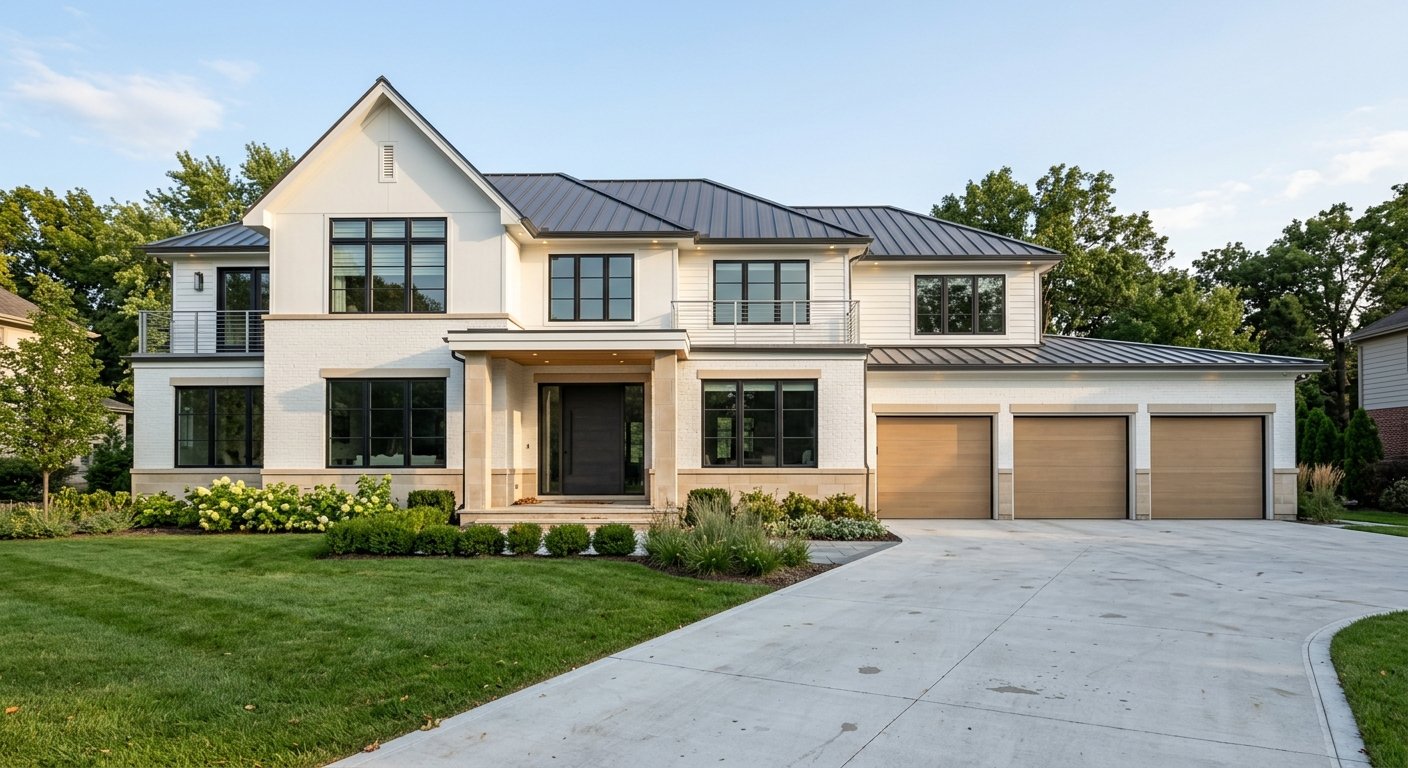
One reason Plymouth stands out is that the housing choices feel connected. You can see a realistic progression from townhome living to larger four- and five-bedroom homes without leaving the city.
Current inventory snapshots help illustrate that range:
Many move-up buyers will likely focus around the $500,000 to $700,000 range based on the current visible inventory, while premium new-build and high-amenity homes can stretch much higher. That is not a citywide average. It is a useful way to think about today’s available step-up options.
Plymouth remains a competitive market, which is important if you are planning to both sell and buy. For the rolling 12 months through February 2026, the local market update showed a median sales price of $495,000, an average sales price of $580,008, 98.9% of original list price received, a median of 45 days on market, and just 1.4 months of inventory (Minneapolis Area Realtors market update).
That combination tells you two things at once. First, buyer demand is still supporting prices. Second, desirable homes can move quickly, so your next-home strategy matters just as much as your sale strategy.
Zillow’s current estimate puts Plymouth home values at $496,906, with homes going pending in around 52 days, which generally lines up with the broader local market snapshot (Minneapolis Area Realtors market update).
Move-up buyers are not only buying more space. You are also making a larger financial bet, so market stability matters.
Plymouth has several traits that support resale confidence. The city’s 2025 community survey found that 96% of residents rated Plymouth as an excellent or good place to live, 91% rated the city’s economic health positively, and 94% rated safety highly (Plymouth community survey). Those numbers do not guarantee future value, but they do point to a community with strong resident satisfaction and a solid overall reputation.
There is also a supply story behind Plymouth’s market. The city saw major residential growth in the 1970s and 1980s, and it is now nearing build-out as vacant land has diminished (City of Plymouth housing plan). In plain English, that means resale performance is often shaped more by turnover, condition, and location than by waves of brand-new land opening up all at once.
Not every move-up purchase needs to be brand new. In Plymouth, the age of the housing stock can actually create useful options for buyers who value layout, lot size, or location and are open to updates over time.
The city notes that by 2016, about 67% of the housing stock was less than 35 years old, reflecting a mature suburban market that developed heavily in earlier decades and then slowed as land became scarcer (City of Plymouth housing plan). Plymouth also offers architectural consultations for homes 30 years and older, along with a home rehabilitation loan of up to $40,000, which adds helpful context for aging homes that may need improvement rather than replacement (City of Plymouth housing plan).
For you as a buyer, that can translate into more choices. Some homes may be fully updated and priced accordingly. Others may offer a better entry point into a larger home if you are comfortable improving finishes or systems over time.
A move-up decision is not just about square footage. It is also about how your next home supports your day-to-day routine.
Plymouth offers several city-supported park-and-ride options with free parking and bus access. These include Station 73 at Highway 55 and County Road 73, plus locations at St. Philip, Northwest Greenway Pavilion, the Plymouth Ice Center, the former Four Seasons Mall site, and a pedestrian shelter at The Reserve (Plymouth park-and-ride lots).
The road network also supports regional mobility. The city’s I-494 and Highway 55 planning work highlights pedestrian, bike, and bus-rapid-transit connections in a key corridor, and official detour guidance during Highway 55 construction has routed traffic via I-494, I-394, and Highway 169 (I-494 and Highway 55 small area plan). For west-metro buyers, that suggests multiple ways to navigate work, errands, and regional travel.
In a market with low inventory, your success often comes down to sequencing. If homes are receiving close to asking price and inventory remains tight, you do not want to start planning after your current home is already listed.
A smart move-up plan often includes:
Because Plymouth is still moving at 1.4 months of inventory and homes sold for 98.9% of original list price over the last 12 months, preparation matters (Minneapolis Area Realtors market update). The more clearly you define your sale-and-purchase plan, the more confident you can be when the right opportunity appears.
Plymouth is broad enough that generic advice can miss the mark. Price bands, home condition, lot characteristics, and housing style can vary meaningfully depending on where and what you are targeting.
That is where neighborhood-level knowledge becomes valuable. If you are comparing a newer home at the top of your budget with an older property that may need updates, or deciding whether to list first or buy first, clear local guidance can help you avoid expensive guesswork.
If you are considering a move-up purchase in Plymouth or anywhere in the west metro, working with an advisor who understands pricing, timing, seller preparation, and the local buyer pool can make the process much less stressful. If you want a clear, strategic plan for your next move, connect with Aaron Lowe.
Our expansive network and white-glove service ensure a bespoke experience for both buyers and sellers. Let our top producing team find your dream home today.
CONTACT US